Blog

Between 2009 and 2020, Josh published more than 10,000 blog posts. Here, you can access his blog archives.

2020
2019
2018
2017
2016
2015
2014
2013
2012
2011
2010
2009

CUNY Professors Write To CUNY Chancellor About Law School Protest and Heckling

April 26th, 2018

Four members of the CUNY faculty (none in the law school) wrote to the CUNY Chancellor for clarification concerning the protest and heckling of my lecture.

Chancellor James Milliken
City University of New York
205 East 42nd Street
New York, NY 10017

April 24, 2018

Dear Chancellor Milliken,

We write as members of the CUNY Association of Scholars to ask that you clarify CUNY policy regarding disruption of events in which a student or faculty organization invites an outside speaker. Our request comes in the aftermath of an example of speech suppression that took place at our university and, lamentably, with its apparent approval.

We are confident that you know of the (now notorious) event that concerns us – a lecture at the CUNY Law School in which Josh Blackman was shouted down by a group of heckling students. A CUNY Law student organization, the Federalist Society, had invited Blackman to give a public talk at the school—with a topic, ironically, focused on free speech.

While such disruptions on college campuses have become increasingly common, we believe this one merits special attention because—unlike administrators in most recent cases—the law school’s dean appears to condone the behavior of the hecklers.

As described in Inside Higher Ed (4/16/18), Dean Mary Lu Bilek characterized the protest as reasonable because it ended early. She stated that, “For the first eight minutes of the 70-minute event, the protesting students voiced their disagreements. The speaker engaged with them. The protesting students then filed out of the room, and the event proceeded to its conclusion without incident.” She added, “This non-violent, limited protest was a reasonable exercise of protected free speech, and it did not violate any university policy.”

Dean Bilek cited no provision of the student handbook to sustain her claim that “limited” disruptions of an invited speaker’s talk do not violate CUNY policy. The handbook, we should note, implies the reverse, holding that “a member of the academic community shall not intentionally obstruct and/or forcibly prevent others from the exercise of their rights. Nor shall she/he interfere with the institution’s educational process or facilities, or the rights of those who wish to avail themselves of any of the institution’s instructional, personal, administrative, recreational, and community services.”

It is noteworthy that, according to Blackman, the disruptors were intimidating enough to discourage some students from entering the room while the protesters were there. He was, he has stated, “not able to give the presentation I wanted—both in terms of duration and content—because of the hecklers. The Dean is simply incorrect when said the protest was only ‘limited.’” (Blackman had planned a 45-minute address, to be followed by a question-and-answer session, thereby planning to allow time for CUNY Law students, including his critics, to ask him questions about his arguments.) Photographs of the event show the disruptors not only preventing him from delivering a portion of his planned remarks but also obstructing the audience’s view of his PowerPoint presentation.

According to Blackman, Dean Bilek did not contact him before issuing her statement, even though her remarks in part described his reaction to the disruption. Members of one of the law student groups that organized the disruption recently clarified their intent: “When we say ‘fuck the law,’ we mean fuck the law.”

Inconsistent statements from CUNY administrators and spokespersons about the policy affecting disruptions at CUNY have only heightened our concern. The night of the incident, according to Blackman, an unnamed administrator cautioned the disruptors that while they had the right to protest, “you may not keep anyone from speaking.” Only after this intervention did the hecklers leave the room.

After the disruption attracted media attention, a CUNY spokesperson offered a more equivocal definition of the school’s policy, to UCLA Law professor Eugene Volokh, founder of the blog Volokh Conspiracy: “CUNY School of Law fully supports the rights to free speech and open discourse as well as the right to protest.” The spokesperson did not respond to Volokh’s question regarding the institution’s policy “about people protesting in a way that interrupts someone else’s speech.”

Then, four days later, came Dean Bilek’s statement. Simply put, the CUNY policy that she articulated permits its students to use tactics that silence speakers and frighten potential audience members — as long as the disruption occurs in doses of an unspecified limited length.

The ripple effect of this ill-conceived policy on campus discourse is likely substantial. How many speakers would want to deliver lectures on campuses where intimidating disruptions are deemed acceptable by the administration? Further, what message does that policy send to students and faculty members on those campuses who might wish to express unpopular views? By labeling as reasonable the shouting down of speakers, CUNY will surely undermine civil discourse on its campuses.

For these reasons, we hope that you will reaffirm CUNY’s support for the rights of invited speakers to speak and the rights of students in their audience to hear their remarks, and to abandon a policy that chills speech on its campuses. In the alternative, if Dean Bilek did accurately state CUNY policy regarding disruptions, we urge you to make this new policy clear, so that any invited speaker to a CUNY event will know that he or she can be subject to disruption from student critics as a matter of policy.


Martin Burke
History, Lehman College and the Graduate Center

David Gordon
History, Bronx Community College and the Graduate Center

K.C. Johnson
History, Brooklyn College and the Graduate Center

David Seidermann
Geology, Brooklyn College and the Graduate Center


One slight correction: I did not have a Powerpoint presentation to deliver–but the chapter did project a slide on the screen describing the event.
ConLaw Class 26 – The First Amendment

April 24th, 2018

Class 26

The First Amendment

Freedom of Speech
Free Exercise
Establishment Clause

The lecture notes are here.

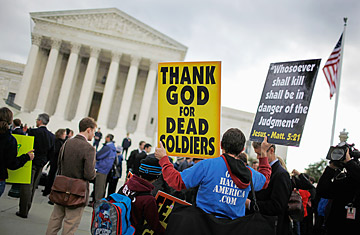
Snyder v. Phelps

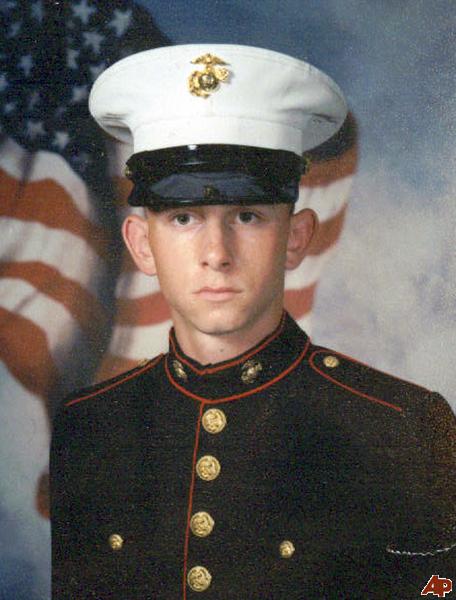
This Marine Lance Cpl. Matthew A. Snyder who was killed in Iraq in 2006.

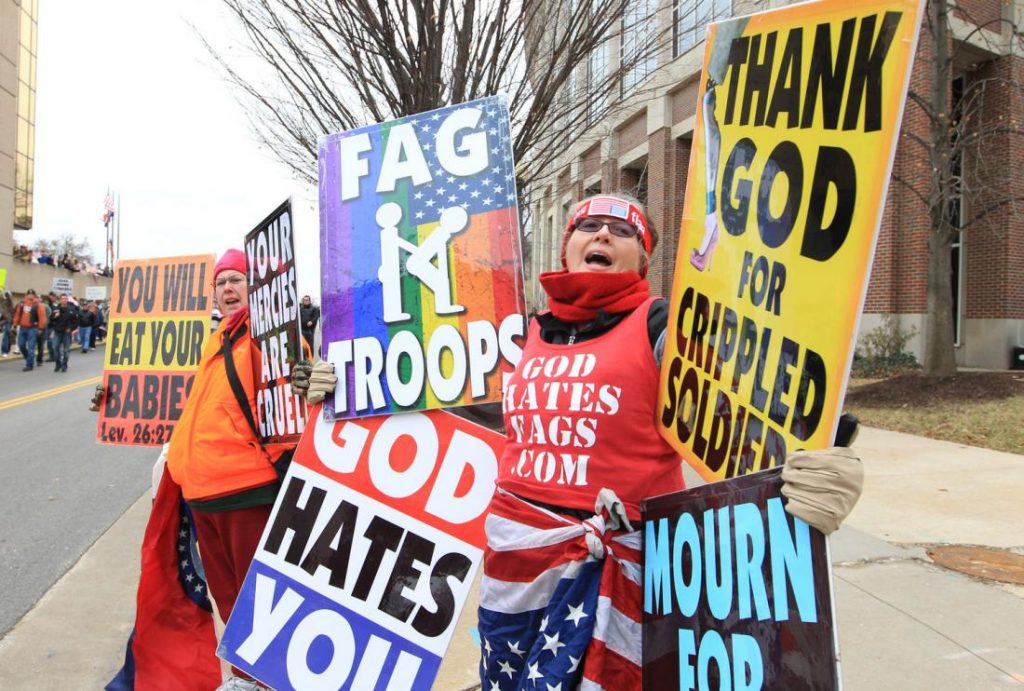
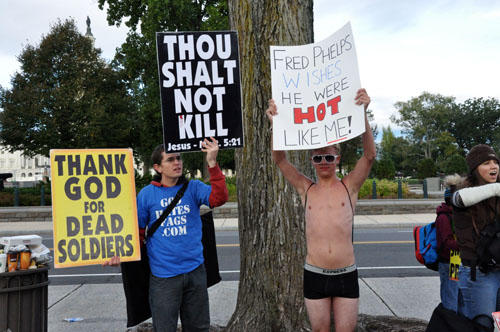
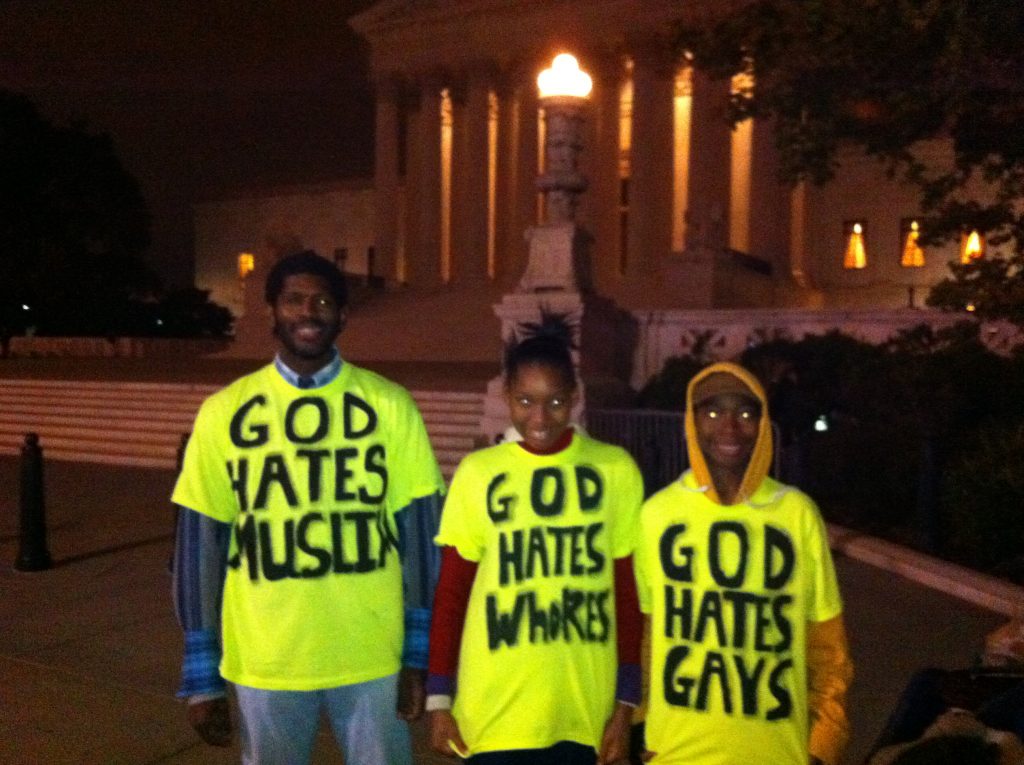
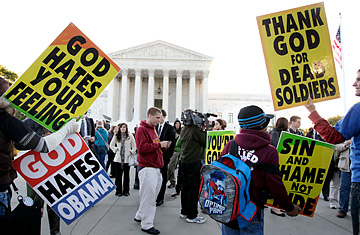
The Westboro Baptists protested outside the cemetery during Snyder’s funeral. The family did not see the protestors at the time, and only became aware of their presence later. The Baptists protest funerals, always quietly, holding up signs with these sorts of messages:

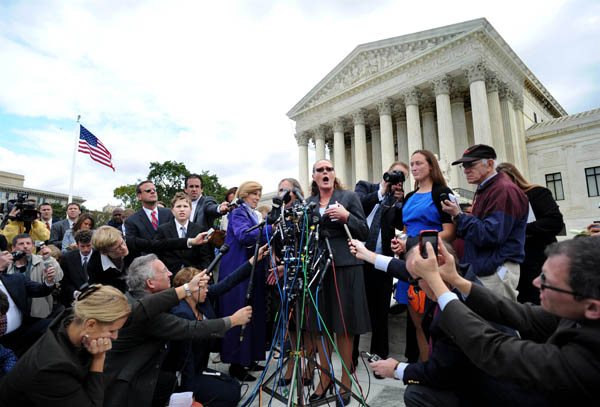
The case was argued for Respondents by Margie Phelps, who is Fred Phelp’s daughter.

The evening before oral arguments at the Supreme Court, I conducted this interview with Orlando Bethel from Alabama who was not a member of Phelps’s church, but was sympathetic to his views, and perspectives on constitutional law.

Matal v. Tam

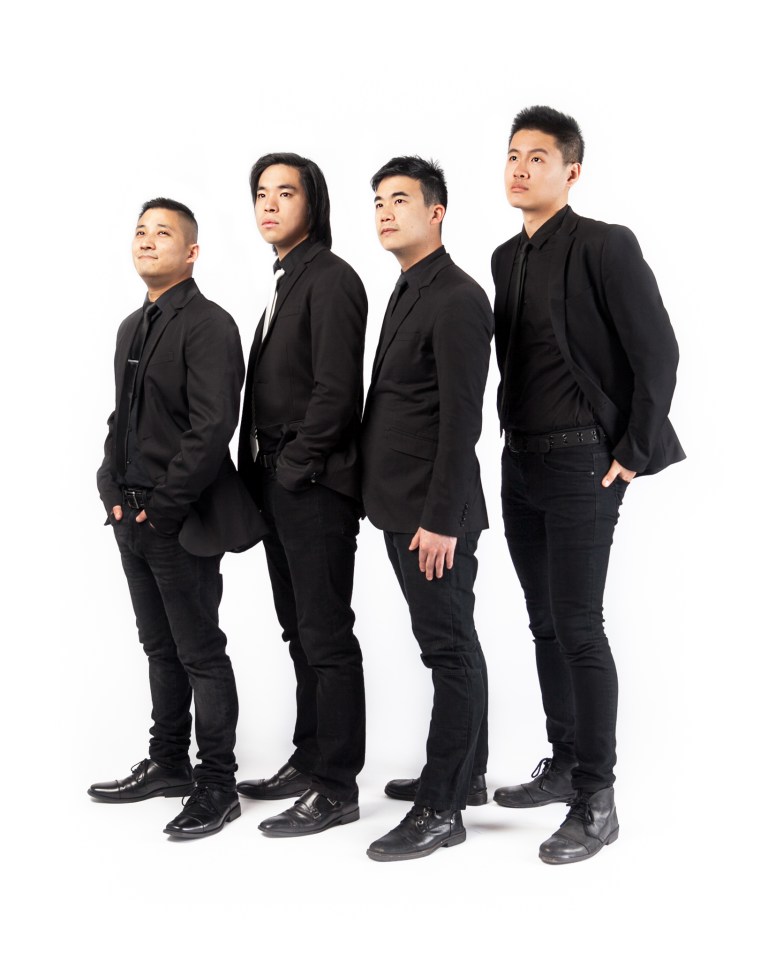
The Slants:


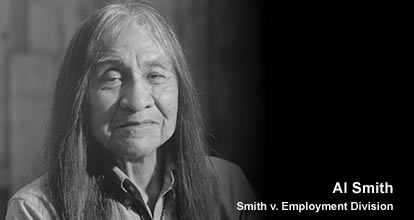
Employment Division v. Smith

al-smith

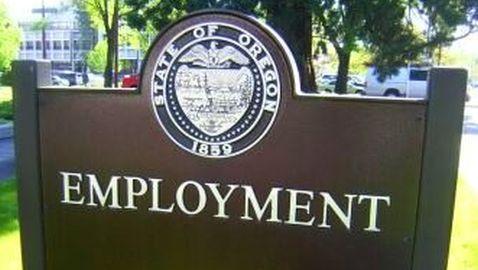
smith-oregon-employment


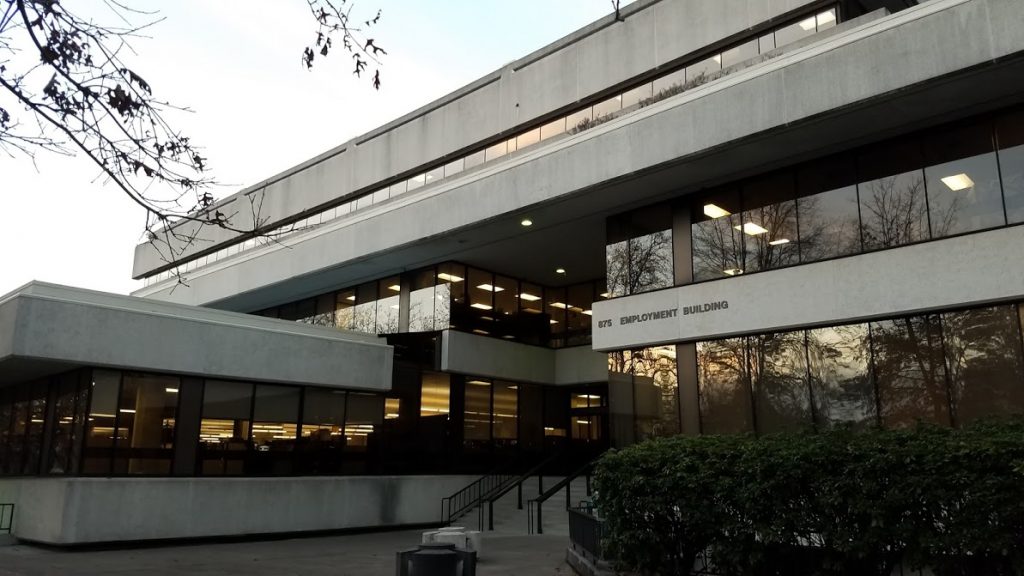
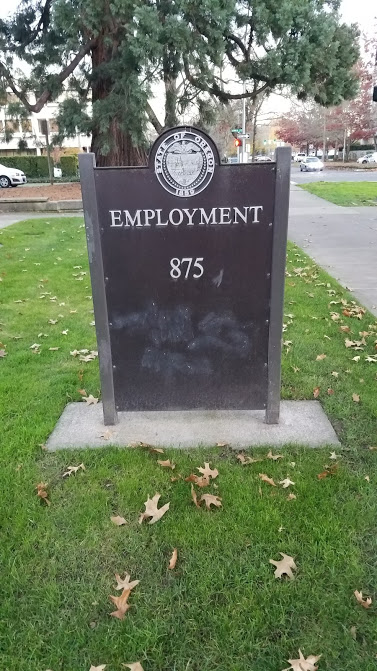
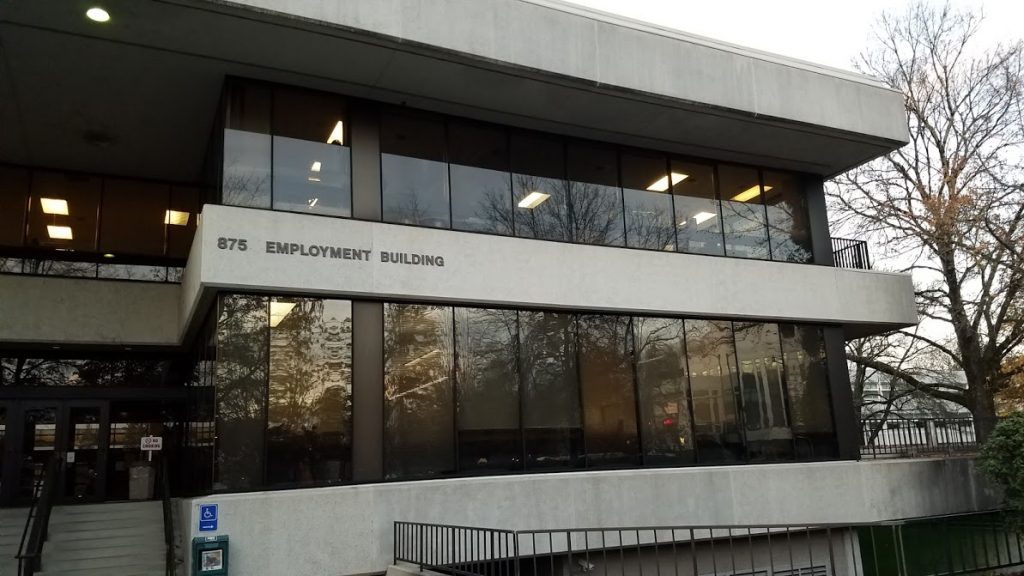
During a recent trip to Salem, Oregon, I stopped at the Oregon Division of Employment, which (at some point) was renamed the Oregon Employment Department. Of course, this was the origin of Employment Division v. Smith. I asked the receptionist if she was familiar with the case–she gave me the oddest glare. In any event, I took pictures.

e1

e2

e3


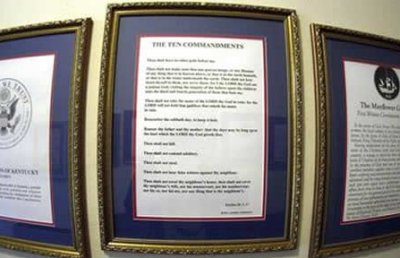
McCreary County v. ACLU of Kentucky

A Compendium of all of my Writings on the Travel Ban

April 23rd, 2018

Since January 27, 2017, I have written more than thee dozen blog posts, editorials, and articles about the three iterations of the travel ban. I have nothing new to say about this case until oral arguments, which I will be attending. I’ve also given hundreds of interviews with the press on the topic.

Here is a compendium of those writings for your convenience.

  1. Pretext and the Establishment Clause, Josh Blackman’s Blog (Jan. 28, 2017).
  2. Nationwide Injunction (Stay, really) issued in Darweesh v. Trump, Josh Blackman’s Blog (Jan. 28, 2017).
  3. The Procedural Aspects of “The Airport Cases,” Josh Blackman’s Blog (Jan. 29, 2017).
  4. Why Trump Had To Fire Sally Yates, Politico Magazine (Jan. 31, 2017).
  5. Washington Seeks Nationwide Injunction of Immigration Order, Relying on Argument It Opposed U.S. v. Texas, Josh Blackman’s Blog (Feb 1, 2017).
  6. Writing Opinions in Times of Conflict, Josh Blackman’s Blog (Feb 4, 2017).
  7. Instant Analysis Nationwide Injunction in Washington v. Trump, Josh Blackman’s Blog (Feb 4, 2017).
  8. The Statutory Legality of Trump’s Executive Order on Immigration, Josh Blackman’s Blog (Feb 5, 2017).
  9. Three Possible Paths to #SCOTUS for Washington v. Trump, Josh Blackman’s Blog (Feb 5, 2017).
  10. The Statutory Legality of Trump’s Executive Order on Immigration: Part II, Josh Blackman’s Blog (Feb 5, 2017).
  11. Second-Guessing on National Security, Josh Blackman’s Blog (Feb 6, 2017).
  12. The Statutory Legality of Trump’s Executive Order on Immigration: Part III, Josh Blackman’s Blog (Feb 7, 2017).
  13. The Statutory Legality of Trump’s Executive Order on Immigration: Part IV, Josh Blackman’s Blog (Feb 11, 2017).
  14. Kerry v. Din, Kleindiesnt v. Mandel, and Washington v. Trump, Josh Blackman’s Blog (Feb 11, 2017).
  15. The Ninth Circuit’s Contrived Comedy of Errors in Washington v. Trump: Part I, Lawfare (Feb. 13, 2017).
  16. The Ninth Circuit’s Contrived Comedy of Errors in Washington v. Trump: Part II, Lawfare (Feb. 14, 2017).
  17. The Legality of the 3/6/17 Executive Order, Part I: The Statutory and Separation of Powers Analyses, Lawfare (Mar. 11, 2017).
  18. The Legality of the 3/6/17 Executive Order, Part II: The Due Process Clause Analysis, Lawfare (Mar. 12, 2017).
  19. The Legality of the 3/6/17 Executive Order, Part III: The Establishment Clause, Lawfare (Mar. 15, 2017).
  20. Why Courts Shouldn’t Try to Read Trump’s Mind, Politico Magazine (Mar. 16, 2017).
  21. IRAP v. Trump: Applying The “Presumption of Regularity” in “Uncharted Territories,” Lawfare (May 9, 2017).
  22. The wrong way to assess the travel ban: Trump’s words in interviews and on the stump should not decide an appeals court’s ruling, New York Daily News (May 9, 2017).
  23. Hawaii v. Trump: What Would an “Objective Observer” Think of President Trump’s Travel Ban?, Lawfare (May 16, 2017).
  24. The Simple Answer to Judge Paez’s Question about Korematsu, Lawfare (May 19, 2017).
  25. Analysis of IRAP v. Trump Part I: The Fourth Circuit’s Reliance on Pre- and Post-Inauguration Statements, Lawfare (May 27, 2017).
  26. Analysis of IRAP v. Trump Part II: The Fourth Circuit’s Misuse of Mandel, Din, Lemon, and Town of Greece, Lawfare (May 28, 2017).
  27. Analysis of IRAP v. Trump Part III: The Concurring Opinions of Judges Thacker, Keenan, and Wynn, Lawfare (May 30, 2017).
  28. Analysis of IRAP v. Trump Part IV: Judge Niemeyer’s Dissent, Lawfare (June 2, 2017).
  29. Analysis of IRAP v. Trump Part V: Judge Shedd and Judge Agee’s Dissents, and the Government’s Petitions for Certiorari and Applications for Stay, Lawfare (June 2, 2017).
  30. All The President’s Tweets, Lawfare (June 5, 2017).
  31. America Needs Closure on the Travel Ban, N.Y. Times (June 11, 2017).
  32. Six Possible Options for the Supreme Court’s Review of the Travel Ban, Lawfare (June 24, 2017).
  33. The Scope of the Supreme Court’s Decision in IRAP v. Trump, Lawfare (June 27, 2017).
  34. Understanding the Supreme Court’s equitable ruling in Trump v. IRAP, SCOTUSBlog (July 12, 2017).
  35. The Solitary Executive, Foreign Policy (August 18, 2017).
  36. ‘Neutral Principles’ and the ‘Presumption of Regularity’ in the Era of Trump, Lawfare (Sept. 7, 2017).
  37. Reality Sets in for Federal Courts: The Travel Ban Was a ‘Temporary Pause’, Lawfare (Sept. 25, 2017).
  38. The Legal Resistance to President Trump, National Review (Oct. 11, 2017).
  39. A Nonchalant Conclusion to Trump v. IRAP, Lawfare (Oct. 13, 2017).
  40. The Travel Ban and the Rational Basis Test, Lawfare (Oct. 23, 2017).
  41. For Judges, ‘Legality’ Is Their Only ‘Reality’, Lawfare (Dec. 11, 2017).
  42. The Ninth Circuit Previews Why Article II Will Save The Travel Ban, Lawfare (Dec. 26, 2017).
  43. On the Judicial Resistance, Lawfare (Feb. 12, 2018).
  44. The Travel Ban, Article II, and the Nondelegation Doctrine, Lawfare (Feb. 22, 2018).


Primus on Korematsu and the Travel Ban

April 22nd, 2018

On Balkinzation, Richard Primus writes about a debate he and I had at the University of Michigan in October. Though he links to the video I posted, he does not refer to me by name. Instead, he refers to me as “another law professor—a relatively thoughtful defender of the Trump Administration’s executive orders.”

Several months ago, I transcribed portions of Primus’s remarks. I sent them to him for his approval, and incorporated his proposed changes. Here they are, with time stamps.

30:50 : I am not here to tell you that I have looked into Professor Blackman’s soul and found evil. I have known Professor Blackman for some years, though I do not know him closely, he has always presented in his direct interactions with me as a very friendly person. But I think almost everyone looks back in history and identifies episodes as evil, and I don’t see any reason to think that evil is a thing that existed in the past, and disappeared from the earth. It is difficult to call evil by its own name.

33:00: What should the lawyer do when faced with a policy that is evil? When Justice Scalia faced policies he thought were evil and were of questionable constitutionality, he worked to discover that they were unconstitutional from his point of view. That is appropriate stated in that way. If you are faced with an evil, and it is obviously unconstitutional, then fine. If you are faced with an evil, and it is obviously constitutional, then that is regrettable. You can try to do something about it in politics or otherwise. If faced with evil about which you entertain doubts, or if faced with an evil about which you could make some good creative arguments to show why this might be constitutional, I have to ask, why do that. Maybe you have a client, maybe you are bound ethically to serve your client and that is the side you are on, and there are reasons you can’t resign your post. And if you’re just you, thinking about this question, and there are really good arguments that the thing is unconstitutional, and then you hear an argument, maybe if I look at it this way, and squint, maybe that’s constitutional, if you rest there, you’re not doing your job.

59:08: I use the word evil. I think it is. I think the people who put it forward are evil, I think the people who defend it and execute it are enabling something evil. I am willing to say that other people will disagree. I don’t think I’m immune from that. I am perfectly capable of engaging in or enabling evil. I hope people will call me out when I do. I can think of instances where people would say such things. I am not predicting that the Supreme Court will take my view of the matter. I don’t know what I would have predicted when Korematsu was going to be argued. I wasn’t alive. I can’t think myself back, I don’t know what I would have done. What I do know is that Korematsu was wrong and the Supreme Court upholds 3.0 the Court will be wrong. Four Justices who were in the majority in Korematsu also ruled with the Court in Brown, and I don’t think they were particularly evil people as Supreme Court Justices go, but people who were not as a general categorical matter evil people are sometimes vulnerable to accepting plausible-sounding legal arguments for deferring to the president in national security situations and denying that what they have done is racist or enabling of racism. That’s what happened in Korematsu. I think that when faced with the situation like that, what I ought to do is to say this is unconstitutional. The law on it leads me easily to that conclusion and that’s all I need.

Primus remarks in October, as well as his recent post, preview the template of how the professoriate will react to the Supreme Court’s (expected) decision to uphold the travel ban–especially if the Justices signal at arguments that the lower court judgments will be reversed. The Justices today would be enabling evil as did the Justices in Korematsu. Lawyers (like me) who defend the travel ban are also enabling evil as did the lawyers who defended the policies at issue in Korematsu. It’s evil all the way down.

Last year I explained why it is a mistake to analogize the travel ban case to Korematsu. Adam Liptak linked to my analysis in his recent preview of Hawaii v. Trump.

There are, of course, major differences between the two orders, as legal scholars have noted. Roosevelt’s order applied to people living in the United States, many of them citizens, while Mr. Trump’s order concerned nationals of other countries living abroad. (The countries initially included Iran, Libya, Syria, Yemen, Somalia, Chad, North Korea and Venezuela. Last week, the administration lifted restrictions on travel from Chad.)

In enforcing Roosevelt’s order, moreover, the military singled out “persons of Japanese ancestry.” Mr. Trump’s order, by contrast, is neutral on its face, though it disproportionately affects Muslims.

If Neal Katyal tries to invoke Korematsu, as he did in the 9th Circuit, I expect Justice Alito will raise both of these points: that the order applies to people outside the United States, and is facially neutral. In response, Katyal will then have to invoke Primus’s specter of evil. That argument will not resonate with a majority of the Court. But under Primus’s view, that majority is simply enabling evil. It’s evil all the way down.


Harlan Institute-ConSource OT 2017 Virtual Supreme Court Semi-Finals

April 22nd, 2018

The Harlan Institute and ConSource have completed the semi-final rounds for the OT 2017 Virtual Supreme Court Competition. This year, we received a record-number of submissions on Carpenter v. United States. On Thursday, April 26, 2018, we will hold the championship round at the Georgetown Supreme Court Institute. Zack Lori and Chris McDonnell of Greenwich HS will represent the petitioner (from Match 1). Joanna Boyer and Makaylia Askew of Creekview HS will represent the Respondent (from Match 2). Congratulations to all of the teams that participate.

Here are the briefs and submissions of the twelve teams that advanced.

Match 1

Petitioner: Greenwich HS (Zack Lori and Chris McDonnell)

Respondent: Westover HS (Caroline Broude and Fangyi Wang)


Match 2

Petitioner: Friscoe CTE (Sasha Chuprakova and Nancy Trinh)
Respondent: Creekview HS (Joanna Boyer and Makaylia Askew)


Match 3

Petitioner: Greenwich High School (James Heavey and Nick Liu)
Respondent: Greenwich High School (Alexander Bound and Matthew Weindling)


Match 4

Petitioner: Walter Payton College Prep (Will Foster and Taylor Kass)
Respondent: Greenwich High School (Jovita Li and Catherine Yang)


Match 5

Petitioner: Creekview HS (Aileen Mai and Amena Tep)
Respondent: Lake Oswego HS (Laura Jiang and Alex Li)


Match 6

Petitioner: Creekview HS (Mahak Merchant and Simon Pena)
Respondent: Stuart HS (Matthew H. and Tiana L.)