Blog

Between 2009 and 2020, Josh published more than 10,000 blog posts. Here, you can access his blog archives.

2020
2019
2018
2017
2016
2015
2014
2013
2012
2011
2010
2009

The Evolution of Heritage

February 24th, 2014

I’ve previously commented on the sense of many in Washington that the Heritage Foundation, since the arrival of Jim DeMint, and changed from primarily a policy think tank to a partisan supporter of political goals. There is a very big difference.

The Times has a feature on this shift from policy to politics:

From its inception in 1973, the Heritage Foundation has provided the blueprint for theRepublican Party’s ideas in Washington. In doing so, it has proved to be the most durable organization of its kind.

But under Mr. DeMint, a South Carolinian who gave up his Senate seat last year to take the helm, Heritage has shifted. Long known as an incubator for policy ideas and the embodiment of the party establishment, it has become more of a political organization feeding off the rising populism of the Tea Party movement.

“Politics follows the culture,” Mr. DeMint said in an interview. “The conservative movement has been derelict in not putting together an organized movement across this country.”

In recent months, some of the group’s most prominent scholars have left. Research that seemed to undermine Heritage’s political goals has been squelched, former Heritage officials say. And more and more, the work of policy analysts is tailored for social media.

With the collapse of the wall between Heritage Foundation and Heritage Action, there has been an exodus of top scholars, and an unfortunate brain drain. Specifically, Heritage Action staffers would accompany policy experts to Capitol Hill:

Efforts by Heritage Action have included pressuring members of Congress to vote against nearly every piece of legislation intended to attract both moderate and conservative Republicans, scoring their votes and often crusading against noncompliant members. Heritage Action staff members began to accompany policy experts to Capitol Hill.

“We need to educate the people who are making the sausage and those who are being force-fed it: the American people,” said Edwin J. Feulner, 72, a founder of the Heritage Foundation, whom Mr. DeMint replaced.

Under Mr. DeMint, the research arm of Heritage has been all but consumed by Heritage Action, which, some former officials and members of Congress say, has weakened the Heritage Foundation’s influence on Capitol Hill, alienated all but the right fringe of the Republican Party and marginalized the serious research that had been a Heritage Foundation hallmark.

“DeMint has not only politicized Heritage, he’s also trivialized it,” said Mickey Edwards, a founding trustee of the Heritage Foundation and a Republican former congressman.

As a result, Heritage was kicked out of the weekly Republican Study Committee.

Perhaps no event has been more indicative of the foundation’s new relations with Congress than the decision by House Republicans last summer to kick Heritage Foundation analysts out of the weekly meeting of their Republican Study Committee.

Heritage officials had been the only outsiders allowed in the meeting. But as Heritage Action became more aggressive, study committee members demanded to know why the people criticizing them in their districts were listening in on their strategizing in Washington.

This evolution at Heritage stresses the significance of the Cato Institute, which resisted their own revolution.
Cert Denied in Lane v. Holder and NRA v. ATF

February 24th, 2014

So much for any Second Amendment cases. It seems the Court has done to the Second Amendment what it has done to Habeas in Gitmo. Abdicate to the lower courts. Not a single grant since McDonald.

What do you mean Posner and Wilkinson have no legal theory?

February 24th, 2014

In a new article, titled “Judge Posner, Judge Wilkinson, and Judicial Critique of Constitutional Theory,” Marc DeGirolami and Kevin Walsh take aim at Judges Posner and Wilkinson, who eschew applying any constitutional theory, even though this approach to constitutional law is a theory itself! Here is the abstract:

Judge Richard Posner’s well-known view is that constitutional theory is useless. And Judge J. Harvie Wilkinson III has lambasted constitutional theory for the way in which its “cosmic” aspirations threaten democratic self-governance. Many other judges hold similar views. And yet both Posner and Wilkinson — in the popular press, in law review articles, and in books — have advocated what appear to be their own theories of how to judge in constitutional cases. Judicial pragmatism for Posner and judicial restraint for Wilkinson seem to be substitutes for originalism, living constitutionalism, political process theory, and so on. But both Posner and Wilkinson also deny that they are offering a theory at all. This is puzzling. How do these judges simultaneously reject constitutional theory yet seemingly replace it with theories of their own?

This Article answers that question — a question that must be answered in order to understand the present-day relationship between constitutional theory and constitutional adjudication. The perspectives of Judge Posner and Judge Wilkinson are particularly valuable because they have not only decided hundreds of constitutional cases but have also written extensively about constitutional theory. Drawing on a close reading of revealing slices of both their extrajudicial writing and their judicial opinions in constitutional cases, this Article makes three contributions. First, it brings to light agreements between Posner and Wilkinson that run far deeper than the heralded differences between them and that stem from their situated understanding of their judicial role. Second, it exposes the limited influence of judicial pragmatism and judicial restraint on these judges’ own constitutional jurisprudence even in those cases where one might expect constitutional theory to exert maximal influence. Third, it explains how judicial pragmatism and judicial restraint are best understood not as constitutional theories but as descriptions of judicial dispositions — character traits that pertain to judicial excellence — that can and should be criticized on their own terms.

I addressed this point in a review of Wilkinson’s book I wrote a few years ago. Judicial restraint is a theory.

The sine qua non of Judge Wilkinson’s view of the judicial power is to permit the people, through self-determination and the democratic process, to rule for themselves. This very rejection of a constitutional theory is, in essence, a theory in and of itself. His anti-theory, one could call it, fails to address a number of curious constitutional counterfactuals the book raises, but does not resolve. What if other judges, applying Judge Wilkinson’s non-philosophy, had to decide divisive cases, where the will of the people was at odds with individual liberty? Think of cases involving segregation, eugenics, disenfranchisement, or criminal rights.

A belief in judicial restraint must come from somewhere. It is not in the text of the Constitution. It must be from somewhere in the cosmos.

More pressing, is from what, or more precisely, from where Judge Wilkinson would derive these “foundational principles essential to the functioning of our nation.” Indeed, it is quite debatable what the foundational principles of our nation are, and what makes them essential to the functioning of our nation. Originalists would say that the foundation of our nation is the Constitution as understood by the founding generation. Living Constitutionalists would say that the foundation of our nation is evolving principles that reflect present circumstances.

And what are these principles to Judge Wilkinson? Addressed almost in passing, he notes that “[o]ne foundational premise of the American experiment is that self-determination is a valuable good.” Judge Wilkinson assumes—almost as if it is incontrovertible—that the foundational principle that separates a bad (read activist) opinion from a good (read restrained) opinion is one that promotes self-governance. But he does not show why this is so, nor does he prove why this is Article III’s ideal explication of “the judicial power.”

Cosmic Constitutional Theory serves as a worthy embodiment of Judge Wilkinson’s quarter-century of minimalist jurisprudence on the Fourth Circuit, and offers salient and vigorous critiques of today’s most popular schools of constitutional thought. However, where the book falters is by failing to come to grips with the foundation of Judge Wilkinson’s own anti-jurisprudence.

In a debate between Randy Barnett and Wilkinson at the last Federalist Society convention, the weakness of Wilkinson’s position became evident. Both his discussion, and book, were very much under-developed.

Prop1 Class 11 – Estates II: Life Estate

February 24th, 2014

The lecture note are here. The live chat is here.

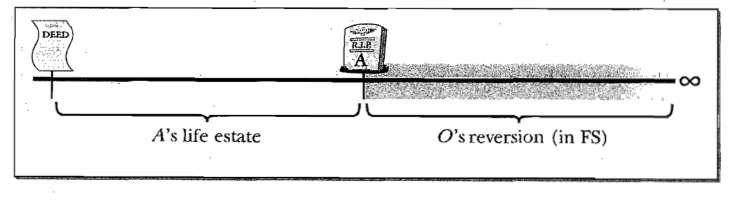
This diagram illustrates the life estate.

life-estate

Here is Jessica Lide’s will:

April 19, 1972

I, Jessie Lide, being in sound mind declare this to be my last will and testament. I appoint my niece Sandra White Perry to be the executrix of my estate.
I wish Evelyn White to have my home to live in and not to be sold.
I also leave my personal property to Sandra White Perry. My house is not to be sold.

Jessie Lide (Underscoring by testatrix)

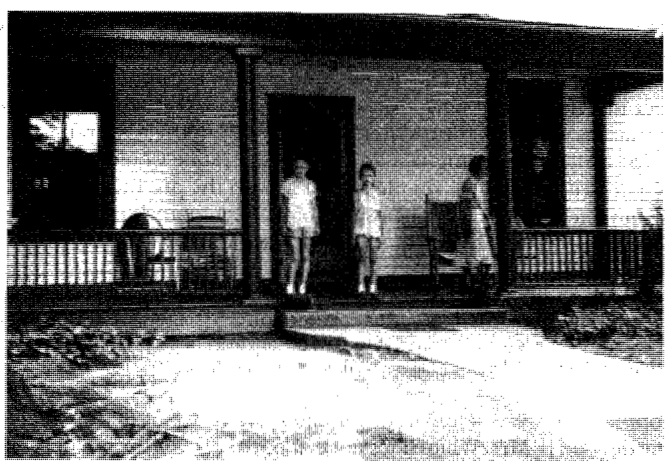
Here is a picture of Jessica Lide’s home. Jessica Lide is on the right, Sandra White is in the middle.

white-house

 Here is the current life expectancy table. If you were born in 1984, your life expectancy is 74.56

Here is the will from the Weedon case:

Second; I give and bequeath to my beloved wife, Anna Plaxico Weedon all of my property both real, personal and mixed during her natural life and upon her death to her children, ifshe has any, and in the event she dies without issue then at the death ofmy wife Anna Plaxico Weedon I give, bequeath and devise all of my property to my grandchildren, each grandchild sharing equally with the other.

Third; In this will I have not provided for my daughters, Mrs. Florence Baker and Mrs. Delette WeedonJones, the reason is, I have given them their share ofmy property and they have not looked after and tared for me,in the latter part ofmy life.

ConLaw Class 11 – Scope of Federal Powers II

February 24th, 2014

The lecture notes are here. The live chat is here.

Scope of Federal Powers II

Wickard v. Filburn

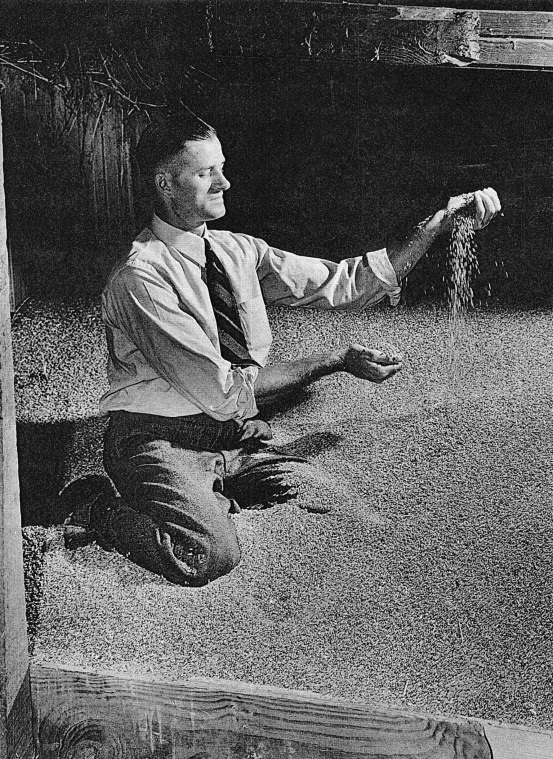
This is farmer Roscoe Filburn.

filburn

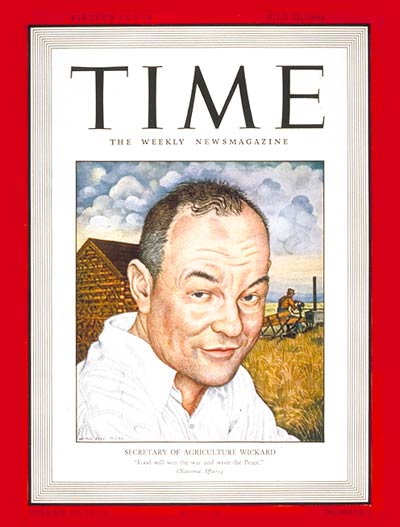
This is Secretary of the Agriculture Claude Wickard.

wickard

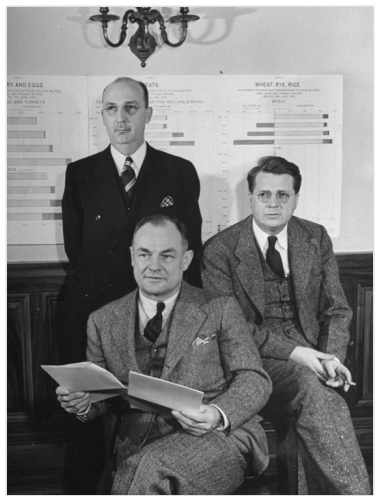
This is Wickard, flanked by New Dealers, in front of various charts and projections about the price of agriculture.

Wickard

Hearts of Atlanta Motel v. United States

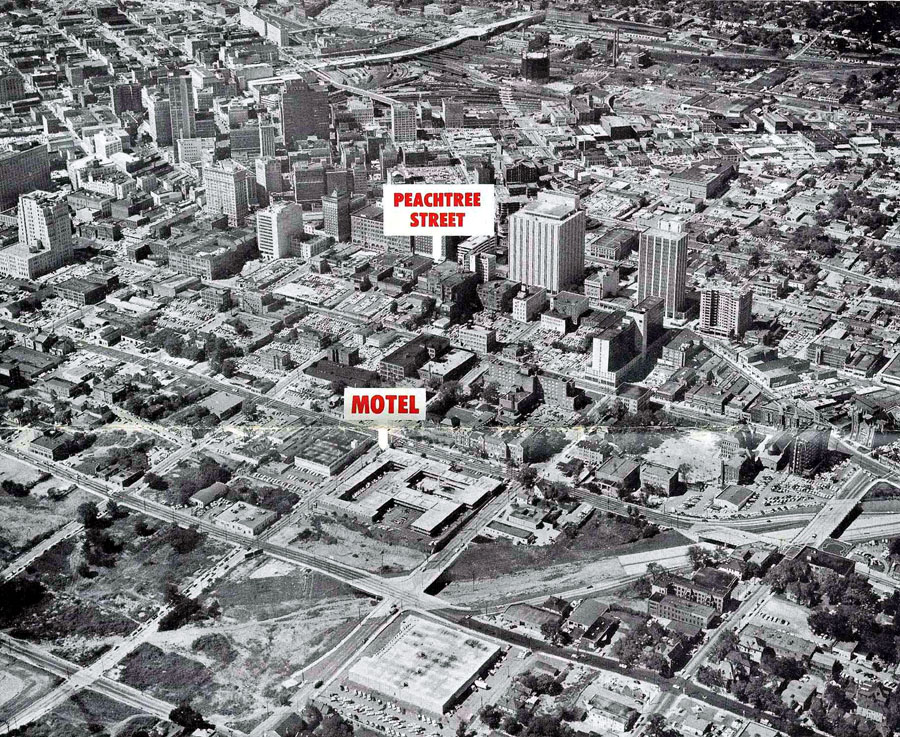
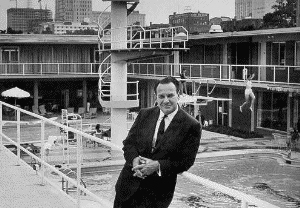
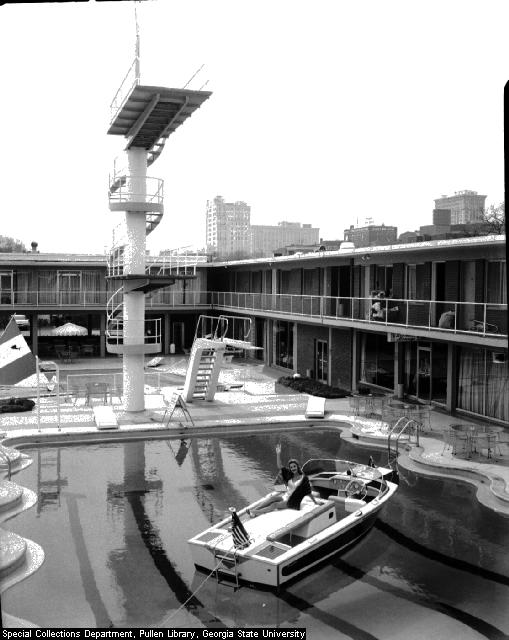
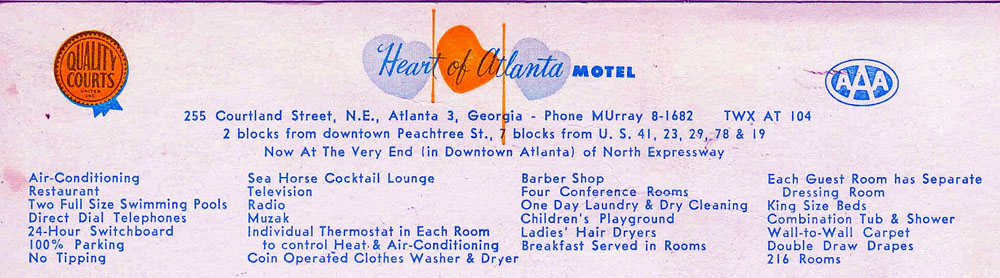
The Hearts of Atlanta Motel, located at 255 Courtland Street NE in Atlanta, was owned by Atlanta lawyer Moreton Rolleston Jr. This was a segregate hotel. Rolleston represented himself all the way to the Supreme Court. The location is currently a Hilton.

hotel-pic

1960-aerial

moreton rolleston


pool

motel

brochure

Katzenbach v. McClung

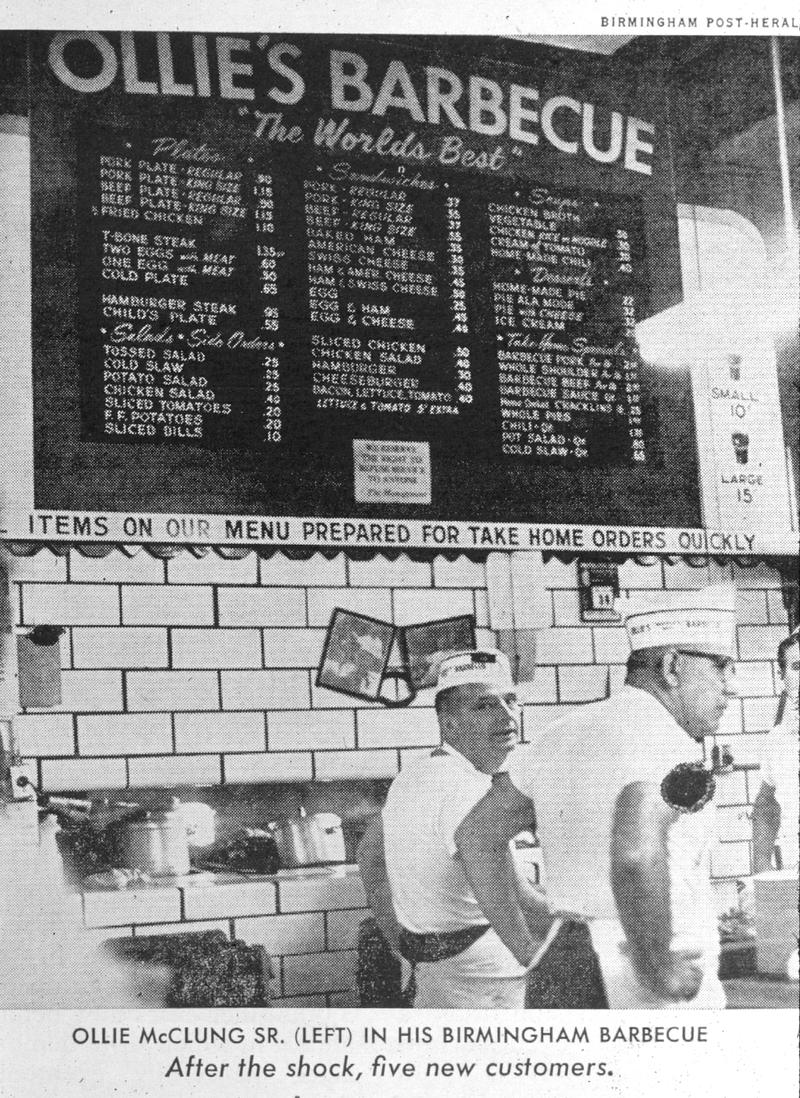
This is Ollie’s Bar-B-Q, the site of Katzenbach v. McClung in Birmingham, Alabama.


And because I am insane, I purchased an entire case of Ollie’s Bar-B-Q sauce.

United States v. Lopez

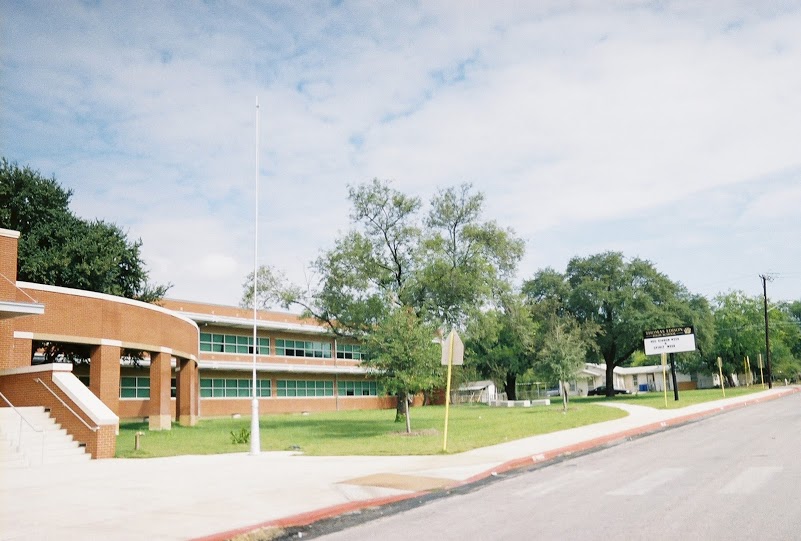
This is Thomas Edison High School in San Antonio, Texas, the site where Alfonso Lopez, Jr., brought a gun to school in violation of the Gun-Free School Zones Act of 1990.

lopez1


lopez2

I obtained these (blurry) photographs from Lopez’s high school yearbook.


IMG00188

IMG00189
IMG00184


IMG00185

The caption reads “Rushing down the field, Alfonzo Lopez warms up before the game.”

Gonzales v. Raich

This is Angel Raich, the lead plaintiff in Gonzales v. Raich.

Raich1

Here is a photograph of Raich using a marijuana vaporizer.

raich2

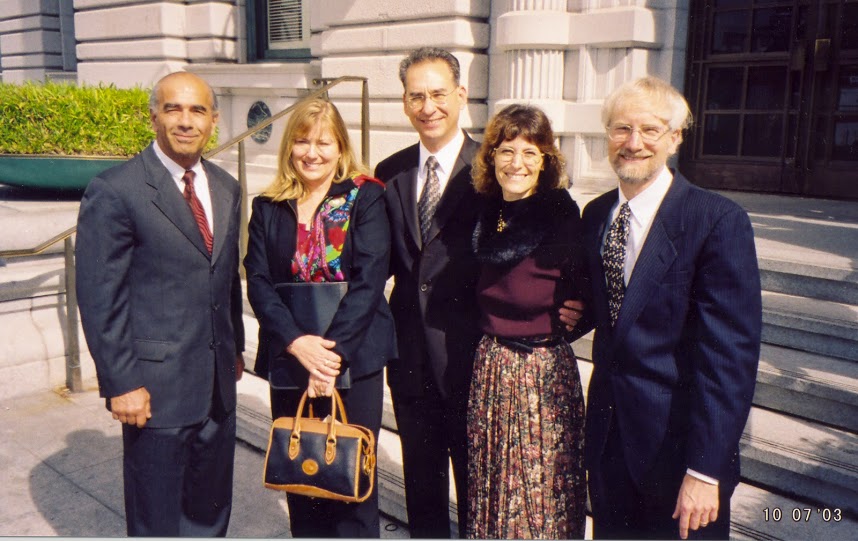
Right to Left: Robert Raich, Angel McClary Raich, (a younger) Randy Barnett, Diane Monson, and David Michael at the Ninth Circuit Court of Appeals in San Francisco, California.

raich-legalteam

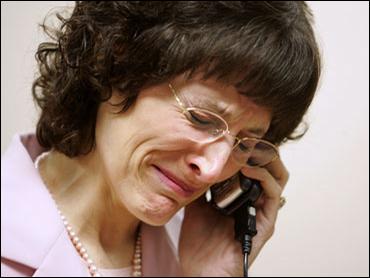
Here is Raich finding out that the Supreme Court ruled against her cause.

raich-phone